

Home > Company News
The nasal cavity has a dense vascular supply, and the direction of visible blood does not always identify its true origin. Blood may track forward along the floor of the nose or run backward into the nasopharynx. Repeated wiping and blind probing may also create new mucosal trauma. The central purpose of endoscopy is to stabilize the situation, clear the field, and identify the primary source rather than simply treating the first pool of blood that appears.
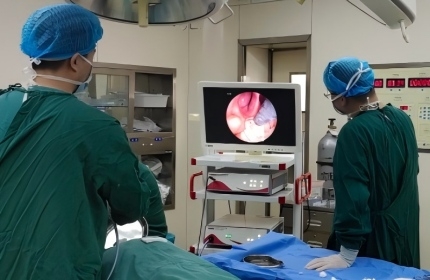
• Kiesselbach's area on the anterior inferior septum: a common source in children and younger adults, often seen as focal oozing or a small superficial vessel.
• The posterior lateral wall and posterior inferior meatus: bleeding may involve branches of the sphenopalatine artery, may be brisk, and often tracks toward the throat.
• The posterior septum, nasal floor, and middle meatus: angled visualization may be needed to exclude a source hidden by clot.
• The olfactory cleft, nasal roof, and sphenoethmoidal recess: these are concealed areas that require careful examination without rough contact.
• An abnormal bulge, ulcer, or friable growth: recurrent unilateral bleeding should prompt evaluation for a vascular lesion, tumor, or another local abnormality.
The clinician first determines whether the patient is stable. With appropriate anesthesia, suction, and monitoring, clots that obstruct the view are removed. Examination can then progress from anterior to posterior along the septum and lateral wall, followed by the floor, meatuses, posterior choana, and roof. After a suspicious area is addressed, the clinician pauses to look for renewed pulsatile bleeding, persistent oozing, or fresh blood collecting from a deeper location.
During heavy active bleeding, a topical vasoconstrictor may temporarily improve the view, but it must be selected and monitored by medical staff in light of cardiovascular risk. Temporary cessation does not prove that the source has been found. A small vascular stump, subtle mucosal elevation, or adherent clot may still be important.
• Small recurrent drops visible at the nostril commonly accompany anterior dryness, inflammation, or local trauma.
• Fresh blood rapidly running into the throat without an obvious anterior source raises concern for posterior bleeding and requires prompt assessment.
• Long-standing recurrent bleeding from one side with obstruction, pain, or odor should trigger investigation for a local lesion rather than repeated cautery alone.
• Diffuse oozing from several sites, easy bruising, or gum bleeding may indicate a coagulation or systemic problem.
A clearly visible superficial point may be suitable for limited chemical cautery or bipolar electrocautery. A small area of persistent oozing may be treated with a targeted hemostatic material. A deeper vascular stump may require endoscopic energy-based control. If the source remains unclear, bleeding persists, or a larger arterial source is suspected, surgical vessel control or endovascular assessment may be considered. Precise localization reduces unnecessary treatment, but the final plan must still reflect the patient's overall condition.

+86-13167065777
Building 5A, No. 9628, Hunan Highway, Pudong New Area, Shanghai, China
 Links:
Shanghai Shiyin Photoelectric Instrument Co.,Ltd. All Right Reserved